EPS ADHESIVES & BASECOATS
8 products
Showing 1 - 8 of 8 products
EPS adhesives and basecoats are the bond-and-reinforcement stage that decides whether an external wall insulation system holds for thirty years, and Renders World stocks over eight trade-grade formulations covering EPS, graphite EPS, XPS, and mineral wool — cementitious 2-in-1 adhesives, polyurethane winter foams rated to 0 °C, and substrate-preparation mortars, with BBA and ETA approval across key products and next-day dispatch from Southampton.
Where EPS Adhesives and Basecoats Perform Best — UK EWI Bonding and Reinforcement
A facade that stays crack-free for decades starts with the right adhesive at two structural stages, and this collection covers both. EPS adhesives and basecoats are the cementitious or polyurethane products that bond insulation boards to the wall and embed alkali-resistant fibreglass mesh into a reinforced basecoat protecting the boards beneath the decorative topcoat. Part of the wider rendering materials range, the collection brings both stages together alongside the substrate-preparation mortars that flatten uneven walls before the boards go on.
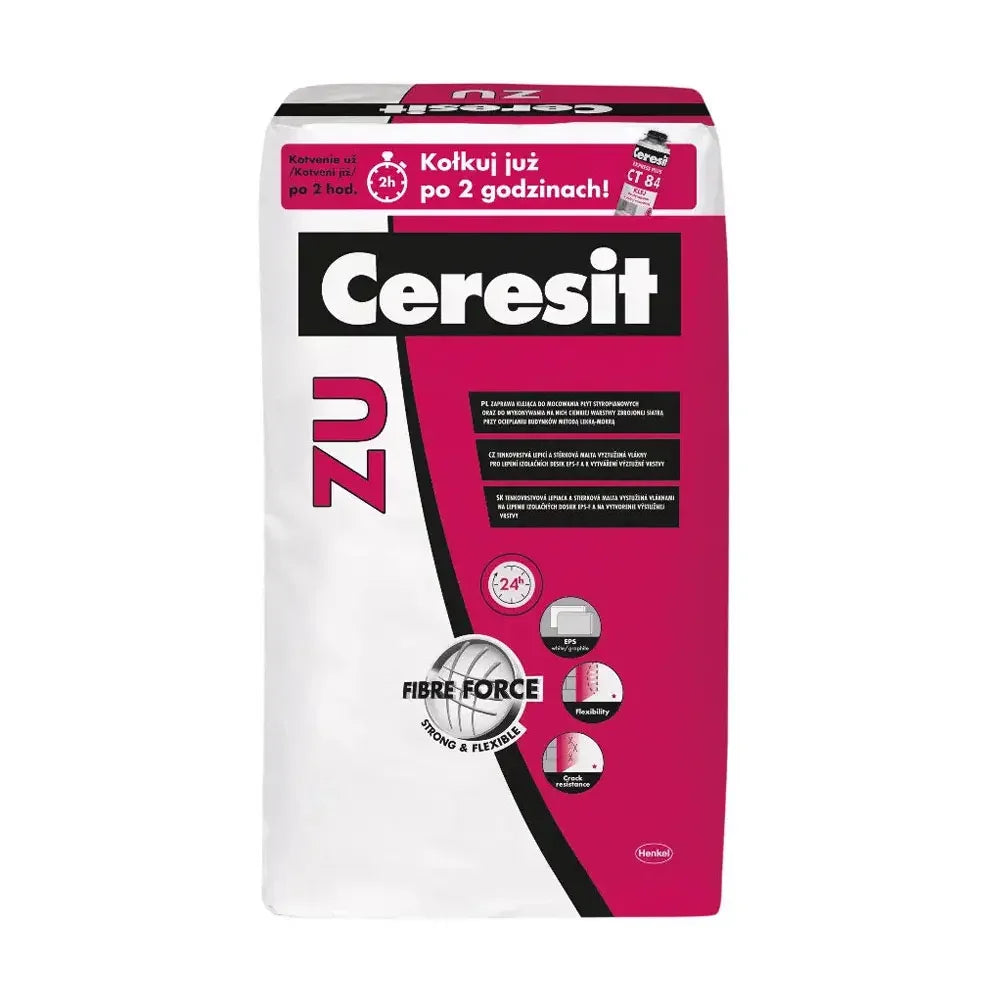
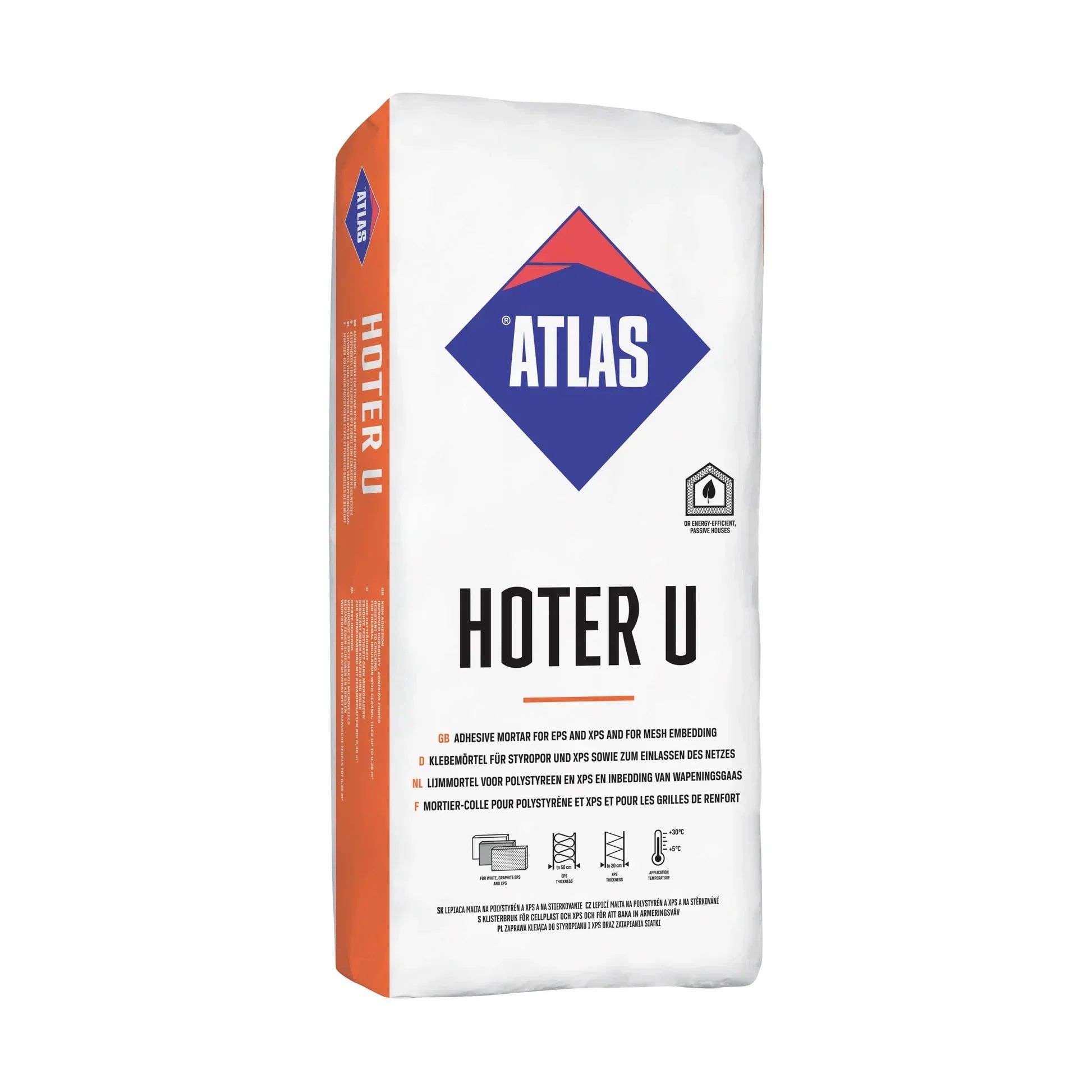
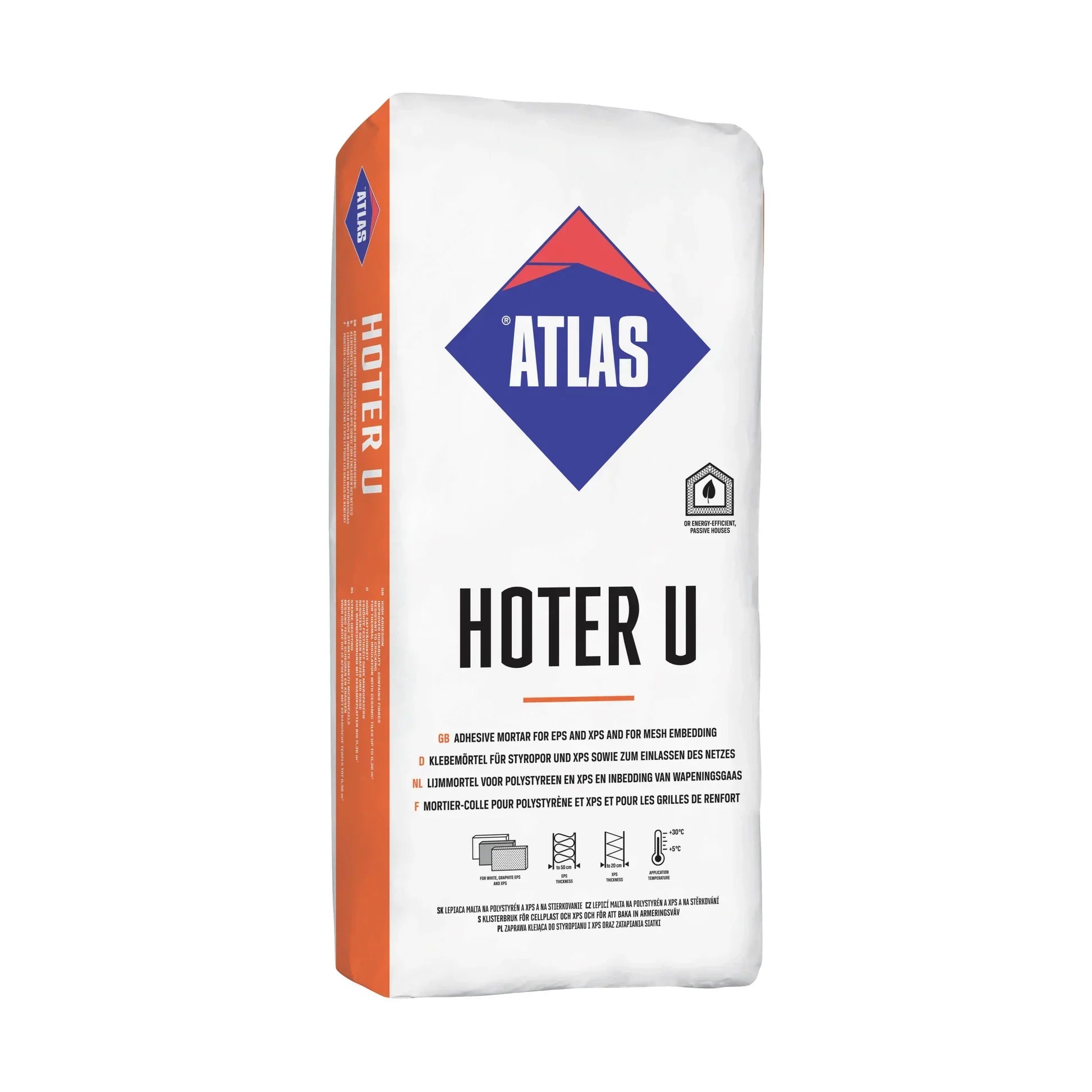
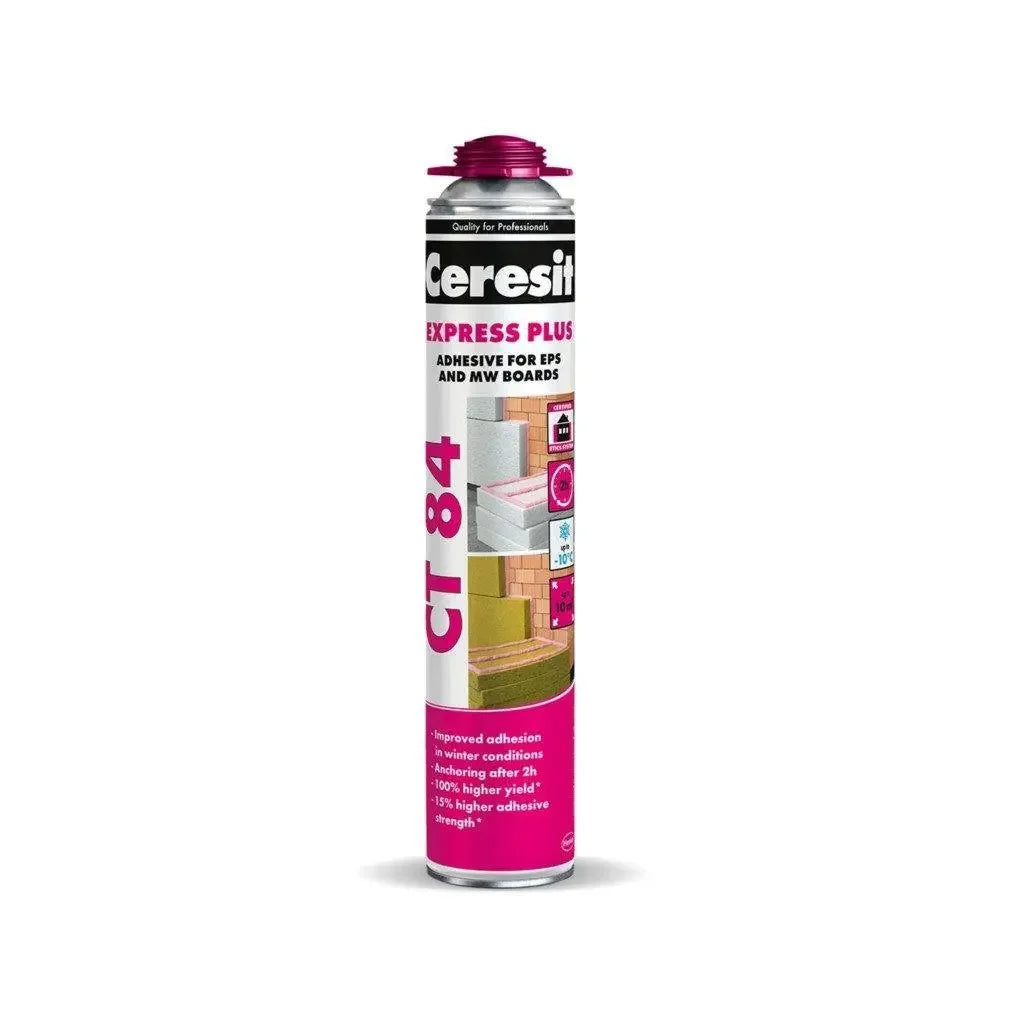
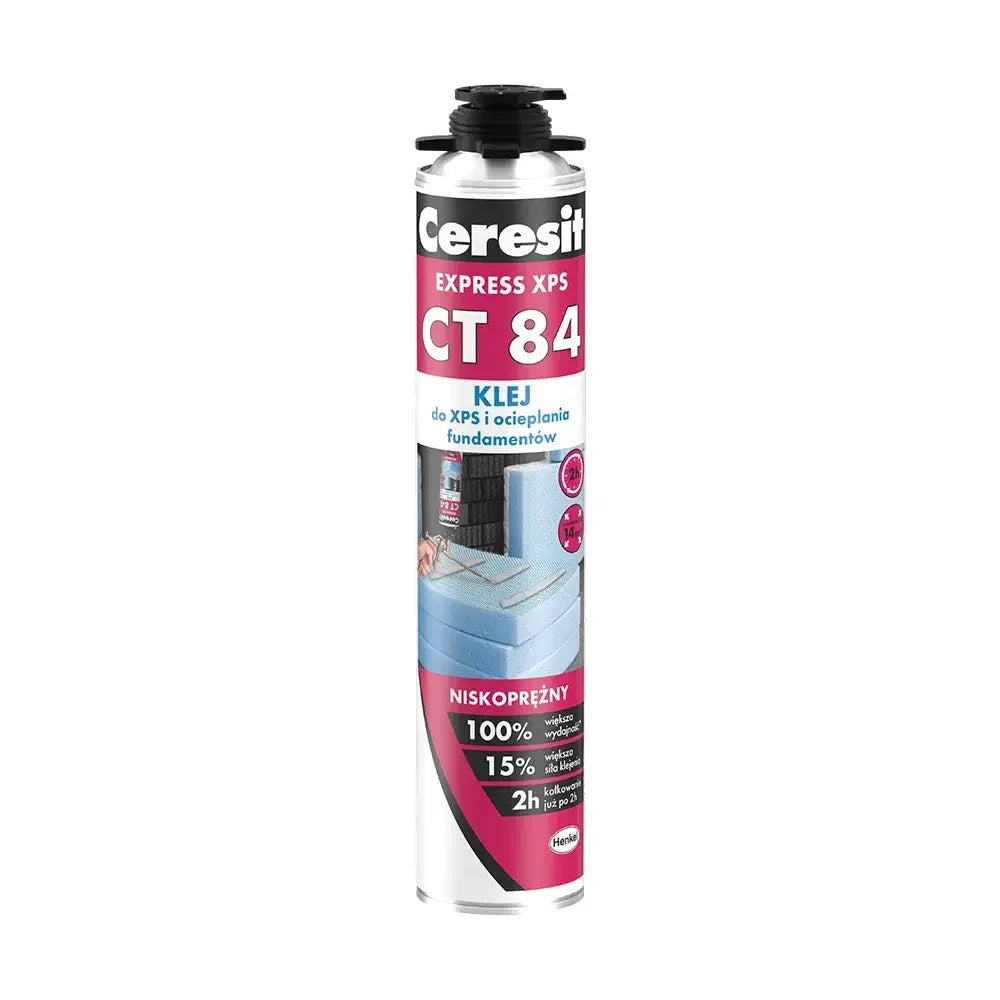
Three product families address different site conditions. Cementitious 2-in-1 adhesives — fibre-enhanced Atlas Hoter U in grey and white, Ceresit ZU, and universal Roker U — handle board bonding and mesh embedding from one 25 kg bag, keeping scaffold logistics simple. Ceresit CT84 polyurethane foam extends the working season down to 0 °C, anchoring boards in about two hours rather than the 24–48 hours cementitious adhesive needs. Substrate-preparation mortars — Atlas One Coat Dash Cover and ZW330 Fast Setting Levelling Mortar — sound up the wall first. Every cementitious adhesive carries BBA Agrément or European Technical Assessment within its system documentation, giving NHBC inspectors and PAS 2035 coordinators the evidence they typically require, subject to project-specific specification.
Why Trade Specifiers Choose EPS Adhesives and Basecoats
- Crack-free reinforcement that stays smooth: Polypropylene and glass microfibres in Atlas Hoter U and Roker U bridge hairline fractures as they form during thermal cycling, so the basecoat stays intact through decades of seasonal movement rather than relying on the mesh alone.
- Year-round installation through UK winter: Ceresit CT84 polyurethane foam bonds boards at substrate temperatures as low as 0 °C with anchorage in roughly two hours, so winter retrofit programmes continue without heated enclosures between November and March.
- One product, two structural jobs: Atlas Hoter U, Ceresit ZU, and Roker U each work as both board-bonding adhesive and mesh-embedding basecoat from the same bag — fewer materials on the scaffold and no compatibility risk between stages.
- Certified system compliance with documented evidence: Key products carry BBA, ETA, and NSAI approvals, giving Building Control, NHBC inspections, and PAS 2035 coordinators the documentation trail they typically require for warranty sign-off.
- Universal board compatibility from one supplier: The range covers standard white EPS, graphite EPS, XPS foundation boards, and mineral wool slabs, so a single Renders World order fulfils the adhesive requirement whether the project sits below DPC or on a fire-sensitive elevation.
- Breathable moisture management for solid walls: Every cementitious adhesive here is highly vapour-permeable, letting moisture pass outward through the build-up rather than becoming trapped behind the insulation — keeping older solid-wall properties dry through the system's service life.
Selection Guide — Find Your EPS Adhesive in 30 Seconds
Identify the insulation board specified, the substrate condition, and whether the project runs through colder months — read across the row to confirm coverage and minimum temperature, then follow the product link to check pricing and specification.
| Your Project | Best Product | Type | Bond Coverage | Min Temp |
|---|---|---|---|---|
| Atlas EPS/XPS bonding + mesh — grey for tinted topcoat | Atlas Hoter U Grey 25 kg | Cementitious 2-in-1 | 4.0–5.0 kg/m² | +5 °C |
| Atlas EPS bonding + mesh — white for light topcoat | Atlas Hoter U White 25 kg | Cementitious 2-in-1 | 4.0–5.0 kg/m² | +5 °C |
| Ceresit Ceretherm system — EPS or graphite EPS bonding | Ceresit ZU 25 kg | Cementitious 2-in-1 | ~5.0 kg/m² | +5 °C |
| Mixed EPS + mineral wool, one adhesive across all elevations | Roker U Grey 25 kg | Cementitious 2-in-1 | 4.0–5.5 kg/m² | +5 °C |
| Winter retrofit, EPS anchored within 2 hours below +5 °C | Ceresit CT84 EPS Foam 850 ml | PU foam | ~10 m²/canister | 0 °C |
| Below-DPC plinth, XPS bonding to bituminous substrates | Ceresit CT84 XPS Foam 850 ml | PU foam | 8–12 m²/canister | 0 °C |
| One-coat substrate prep on uneven masonry before EWI | Atlas One Coat Dash Cover 30 kg | Cement-lime mortar | 1.2–1.5 m²/bag | +5 °C |
| Fast levelling repairs 3–30 mm before install | ZW330 Fast Setting Mortar 25 kg | Levelling mortar | 1.5 kg/m² per mm | +5 °C |
How to Apply EPS Adhesives and Basecoats — Substrates, Conditions, System Layers
EPS adhesives and basecoats form the bonding and reinforcement stage of a full EWI system — the structural layer between the wall and the render finish. A complete project pairs them with EPS insulation boards, mechanical fixings, alkali-resistant fibreglass mesh, a compatible primer, and a decorative topcoat. Substrate temperature must stay at or above +5 °C for cementitious adhesives during application and for 24 hours afterwards, dropping to 0 °C for CT84 foam, with the substrate confirmed by infrared thermometer rather than air reading. Cementitious mortars stay workable for 30 minutes in summer, so mixing in measured batches keeps the bond consistent from first trowel to last.
- Prepare and prime: Confirm the wall is sound and level to within 10 mm under a 2 m straight edge, repairing with ZW330 or Dash Cover where needed, and consolidate dusty masonry with a render primer first.
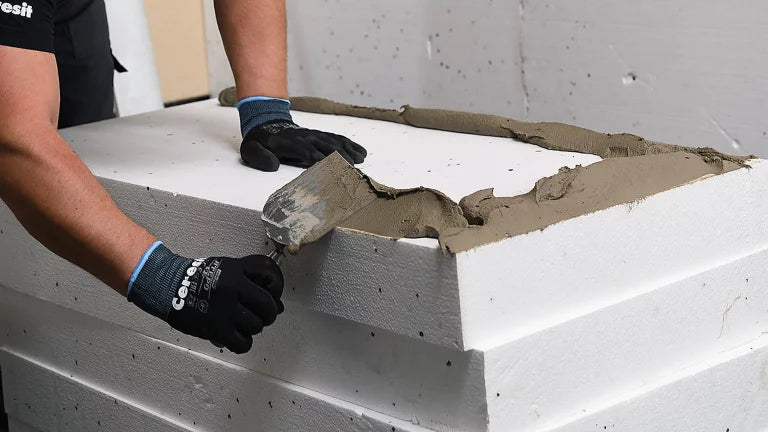
- Bond boards, perimeter-and-dot: A 3–4 cm band along each edge plus 3–6 centre patches, covering at least 40 % of the rear face; press and hold for 30 seconds.
- Cure before fixing: 24 hours for cementitious adhesive before wind-uplift fixings; CT84 foam allows same-day fixing at roughly two hours.
- Embed the mesh: A 2–3 mm pass of the same 2-in-1 mortar, mesh embedded with a stainless trowel, joints overlapped by at least 100 mm.
- Skim and cure: A thin skim over the weave, 3–7 days at +20 °C, then primer and topcoat.
For the full adhesive-to-board pairing process, the EPS adhesive selection guide ranks every option by board type and exposure, and the basecoat and mesh reinforcement guide covers the embedding technique, overlap, and corner detailing step by step.
Pro Tips From UK Installers Using EPS Adhesives
Experienced installers consistently report that a handful of habits separate a problem-free adhesive layer from rework that costs days on tight retrofit programmes — applied together, they protect every layer that follows.
- Read the wall, not the air: North-facing brickwork in December can sit at +2 °C while the air reads +7 °C, so confirm the substrate is at least +5 °C with an infrared thermometer before mixing, or switch to CT84 foam.
- Mix in 30-minute batches: Mix only what the team can apply within 30 minutes in summer or 45 in mild spring, so the mortar stays workable and the bond consistent across every board.
- Scrape-coat mineral wool first: Press a thin scrape coat of Roker U into the surface fibres and let it firm before the full bed — this keys the mortar mechanically into the wool for maximum pull-off strength.
- Match CT84 to board type: CT84 EPS Foam for white and graphite EPS above DPC, CT84 XPS Foam for plinth-zone XPS on bituminous substrates — the chemistries are optimised differently and not interchangeable.
- Plan fixings around the cure clock: Cementitious adhesive needs 24 hours before fixings; CT84 foam allows them within two hours, so match the bonding product to the programme rather than the reverse.
Is an EPS Adhesive or Basecoat Right for Your Project?
- Choose a cementitious 2-in-1 (Hoter U, ZU, or Roker U) when bonding EPS, XPS, or mineral wool and building the reinforced mesh basecoat within a full EWI system — each carries BBA or ETA approval in its parent system documentation, keeping the warranty trail intact from board to topcoat.
- Choose CT84 polyurethane foam when the project runs below +5 °C, the substrate includes timber, OSB, metal, or bituminous plinth detailing, or boards must anchor within two hours to keep the programme moving.
- For matched insulation boards, the EPS insulation boards collection covers white and graphite-enhanced panels across the thickness range that meets current Approved Document L U-value targets, certified to pair with these adhesives.
- For fire-sensitive mineral wool elevations, the mineral wool slab range pairs with Roker U — the one adhesive here certified for both mineral wool and EPS — so mixed-board buildings standardise on a single product.
- For a side-by-side view of fibre-enhanced 2-in-1 mortars against dedicated basecoats, the fibre-enhanced basecoats guide sets out where the polymer microfibre content earns its place on solid-wall and timber-frame retrofits.
FAQ — EPS Adhesive Specification, Ordering, Application
How many bags of adhesive do I need per 100 m² of facade?
A 100 m² elevation using a cementitious 2-in-1 for both bonding and mesh basecoat typically needs 28–40 bags (25 kg each), based on combined consumption of roughly 7–9 kg/m². A three-bedroom semi has around 60–80 m² of insulated facade, so most domestic jobs take 20–30 bags. For CT84 foam at the bonding stage, about 10 canisters cover 100 m², but a separate cementitious mortar is still needed for the mesh basecoat — typically 12–16 bags. Adding 10–20 % contingency is sensible on older walls needing localised levelling.
Can I apply adhesive in winter when temperatures drop below 5 °C?
Cementitious adhesives such as Hoter U and Ceresit ZU perform best when both air and substrate stay at or above +5 °C during application and for 24 hours afterwards, because cement hydration needs that warmth to reach full bond strength. For colder months, Ceresit CT84 polyurethane foam is rated down to 0 °C and cures through a moisture-activated reaction that benefits from the higher humidity of British winters, effectively extending the viable working season by two to three months on retrofit programmes.
What is the difference between a 2-in-1 adhesive and a dedicated basecoat?
A 2-in-1 adhesive such as Atlas Hoter U or Ceresit ZU bonds the board to the wall and embeds the mesh from the same 25 kg bag, so you order one product instead of two, removing compatibility risk and keeping scaffold storage simple. A dedicated basecoat is optimised solely for mesh embedding, typically with finer aggregate and higher polymer content for a smoother topcoat surface — most relevant on large commercial facades where spray application and a finer finish are specified.
Is Roker U suitable for mineral wool as well as EPS?
Roker U is the one adhesive in this collection certified for both mineral wool boards (up to 300 mm) and EPS boards (up to 500 mm). Its elevated polymer content and high vapour permeability suit mineral wool applications especially well, where unrestricted moisture transfer through the adhesive layer keeps the wall dry and mould-free. Projects combining mineral wool on fire-sensitive elevations with EPS on sheltered walls can standardise on Roker U across the whole building.
Which adhesive should I pair with graphite EPS boards?
Every cementitious 2-in-1 here — Hoter U, ZU, and Roker U — is fully compatible with graphite-enhanced EPS. The choice comes down to the specified render system (Atlas or Ceresit), whether mineral wool appears elsewhere, and whether white cement is needed for light topcoats. For thicknesses above 150 mm, mechanical fixings at the density in the system certificate (typically 6–8 per m²) complement the adhesive bond and add wind-uplift security during autumn and winter storms.
Are these adhesives safe to handle on occupied buildings?
Cementitious adhesives are alkaline when wet, so standard PPE — gloves and safety glasses — prevents skin and eye irritation during mixing. Once cured, the mortar is chemically inert and does not leach into the masonry. CT84 foam canisters contain compressed propellant, so ventilate enclosed areas such as deep reveals adequately. All products produce no harmful fumes once cured, making them suitable for homes, schools, and care buildings.